
Piano Tuning
A precise sound. Controlled tension.
A piano that lasts.
Is your piano sounding a bit out of tune?
It’s not just about the ear — it’s about the instrument's health.
For over 25 years, we have been tuning pianos with a simple approach:
Precision, stability, and respect for the instrument.
A courteous, guaranteed service with no surprises. Trust is part of the harmony.
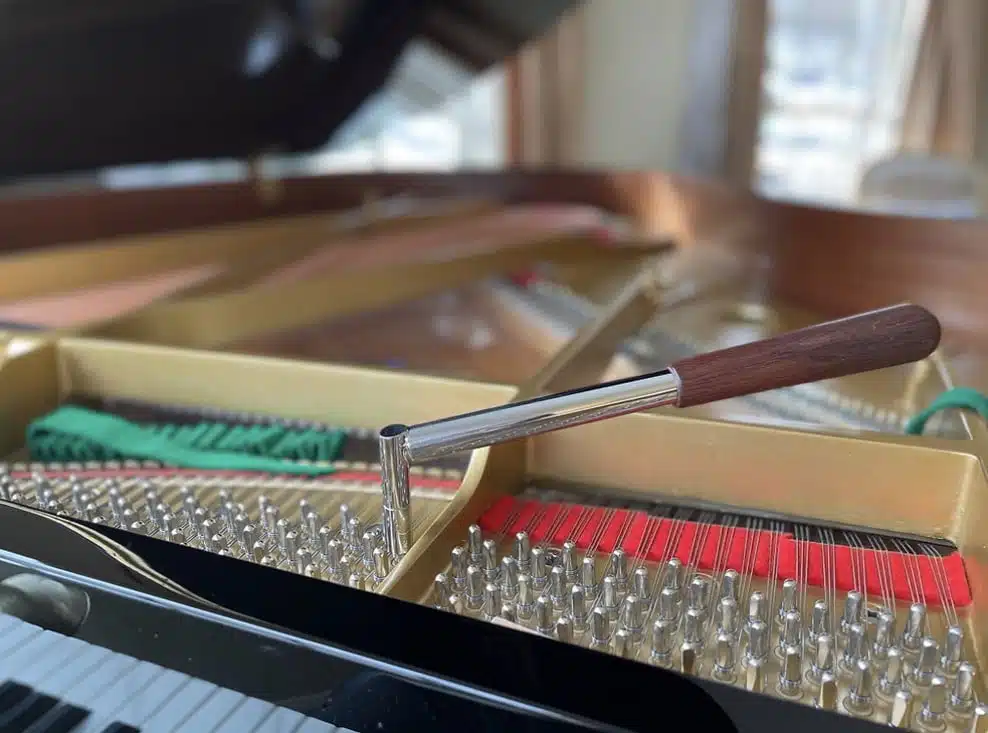


Why tuning is essential
(and not optional)
A piano contains about 220 strings, under a combined tension of 18 to 20 tons. Over time — and especially without maintenance — this tension drops. The result?
-
1The pitch drops (sometimes up to ½ step below A-440)
-
2The tuning becomes unstable
-
3A simple fine-tuning is no longer enough
In these cases, a pitch raise is necessary before achieving a stable tuning.
How often should you tune?
Because the Quebec climate works against your instrument.
per year
per year
The effect of seasons
- ☀️ Summer: too humid → the pitch rises
- ❄️ Winter: too dry → the pitch drops
In the long run, a constantly out-of-tune piano overloads the tuning pins and the soundboard. And then, we're no longer talking about maintenance... but costly repairs.
Prevention or repair?
The choice is simple.
Properly placing your piano
(and avoiding problems)
A few simple rules:

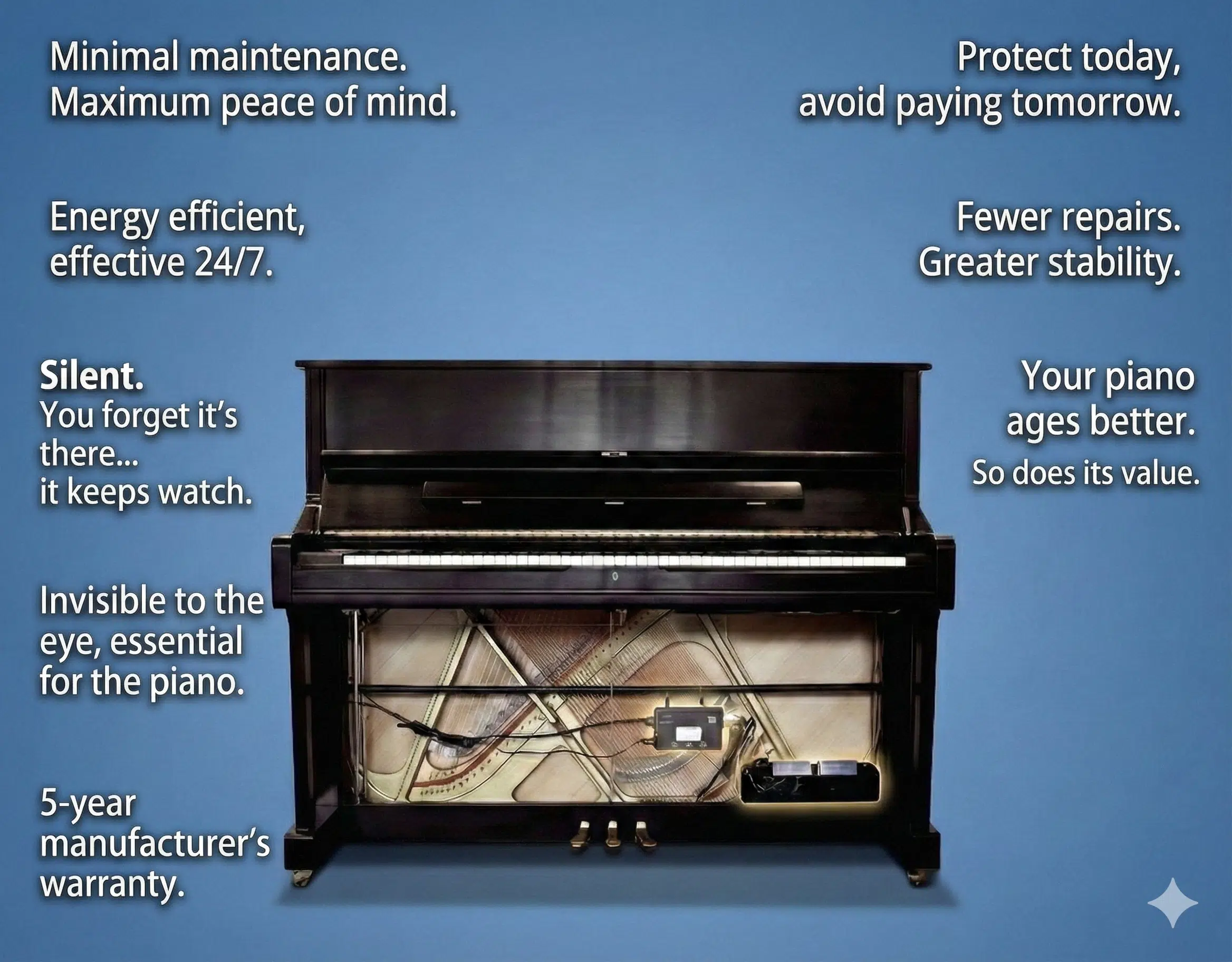
The Climate Control System
If these conditions (40-60% humidity) are difficult to maintain, the most effective solution is a climate control system installed directly inside the piano.
It’s the best insurance for tuning stability... and the longevity of the instrument.